

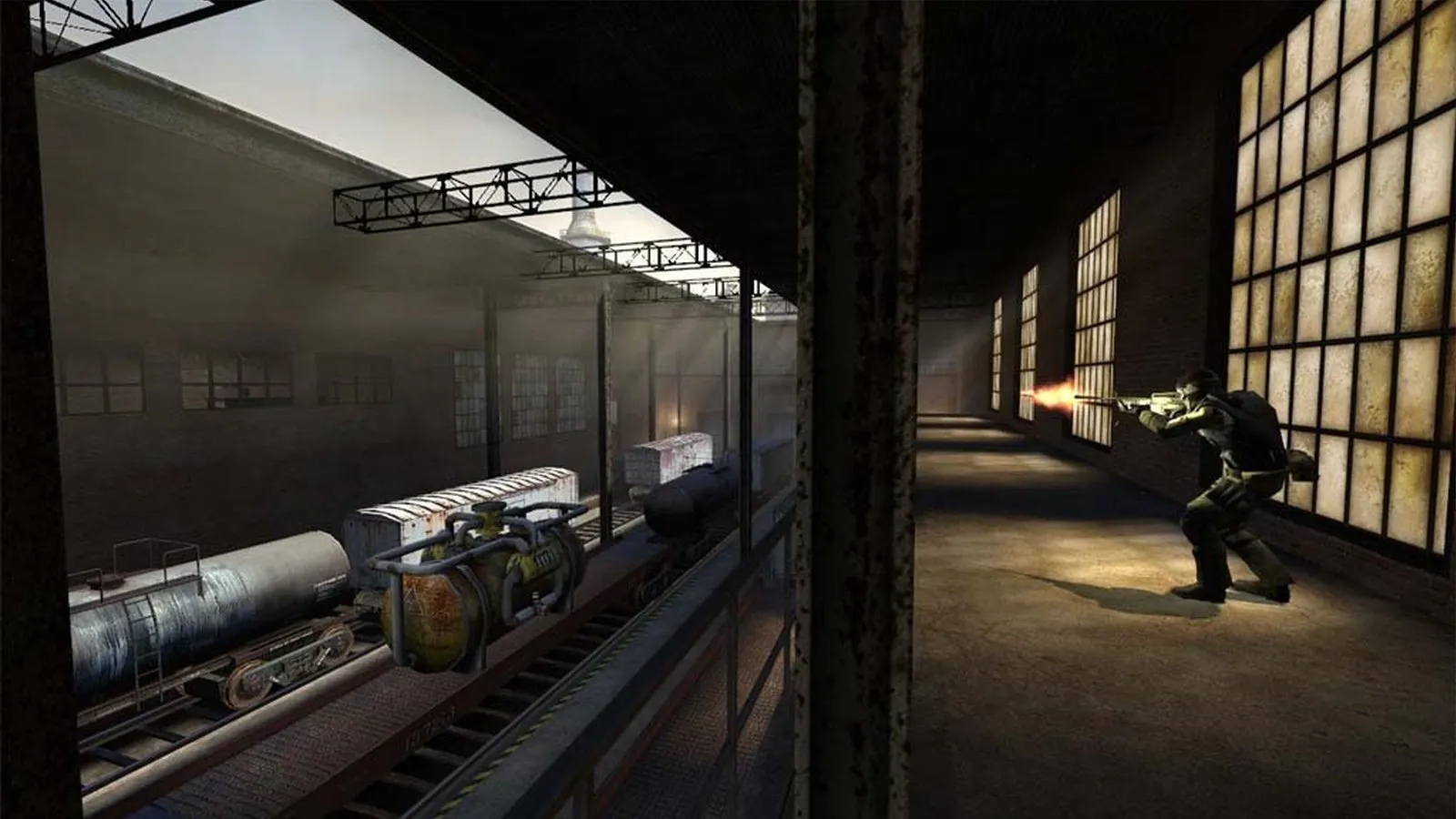
By Mateo Lindqvist Fact-checked by Desmond Ayodele Published
Counter-Strike: Source turned 22 on October 7, 2026, and Valve was still patching it as recently as September. The short answer: CS:S is still playable, still sold on Steam for $9.99, and October 2026 averaged about 2,400 concurrent players on community servers. Below are the real population numbers, every recent Valve patch, the specs, and how CS:S compares with CS 1.6 and Counter-Strike 2.
Key takeaways
- CS:S is alive but small: SteamCharts shows about 2,404 average and 4,468 peak players for October 2026.
- The 2025 spike to roughly 56,000-64,000 players was never explained, and many players suspect bot servers.
- Valve shipped a 64-bit update in February 2025, then more fixes in August and September 2026.
- The only legitimate copy is the $9.99 Steam version, and it often goes on sale. “Free download” repacks miss Valve’s security patches.
- There’s no official matchmaking, mobile version or current Mac build. All play happens on community servers or offline against bots.
Fact-checked
We checked these key facts against the sources named, on November 16, 2026:
- Sales regularly cut the price, and its lowest recorded price is $0.99 from a 2019 Steam sale (source: steamdb.info)
- SteamCharts shows an average of about 2,404 concurrent players in October 2026, peaking at 4,468 (source: steamcharts.com)
- SteamCharts recorded an average of about 2,404 concurrent players in October 2026, with a peak of 4,468 (source: steamcharts.com)
- According to Dust2.us, Counter-Strike: Source hit 56,238 concurrent Steam players over a weekend in late July 2025 (source: dust2.us)
- The best-paid tournaments mostly kept 1.6, so the scene stayed split until CS:GO arrived in 2012 and pulled both communities into one game (source: en.wikipedia.org)
Counter-Strike: Source in 2026: the short answer
Yes, Counter-Strike: Source is still playable and active in late 2026. It’s a small, community-run game now: no ranked matchmaking and no official servers, with a few thousand players at any time and a launcher that runs on almost any Windows or Linux PC made in the last 15 years.
Quick facts table
| Item | Detail | Source / period |
|---|---|---|
| Developer / publisher | Valve | Steam store |
| Release date | October 7, 2004 | Original release |
| Engine | Source (64-bit binaries since Feb 2025) | Valve patch notes, Feb 18, 2025 |
| Price | $9.99 | Steam list price, 2026 |
| Lowest recorded price | $0.99 | 2019 Steam sale, via SteamDB/GG.deals |
| Average players | ~2,404 | SteamCharts, October 2026 |
| Peak players | 4,468 | SteamCharts, October 2026 |
| All-time tracked peak | 63,989 | SteamBase, September 8, 2025 |
| Steam reviews | 96% positive, 191,985 reviews | As of July 4, 2026 |
| Platforms | Windows, SteamOS + Linux | Steam Support |
| Latest update | Mid-September 2026 technical patch | Valve, Sept 2026 |
| Mobile version | None official | n/a |
Who should buy it in 2026 (and who should play CS2 instead)
CS:S is a good buy if you want 2004-era Counter-Strike on community servers, need its assets for Garry’s Mod, or like modes such as surf, bhop and jailbreak that grew up on this engine. At $9.99, and often far less on sale, it costs about as much as a sandwich.
If you want ranked matchmaking, a skill rating, a pro scene to follow, or reliable 5v5s at 2 a.m., play Counter-Strike 2. CS2 is free-to-play and has hundreds of thousands of concurrent players. CS:S has a few thousand. The honest case against CS:S is simple: you’ll spend more time browsing servers than in a CS2 queue, and its competitive community is a small fraction of what it was in 2008.
What is Counter-Strike: Source?
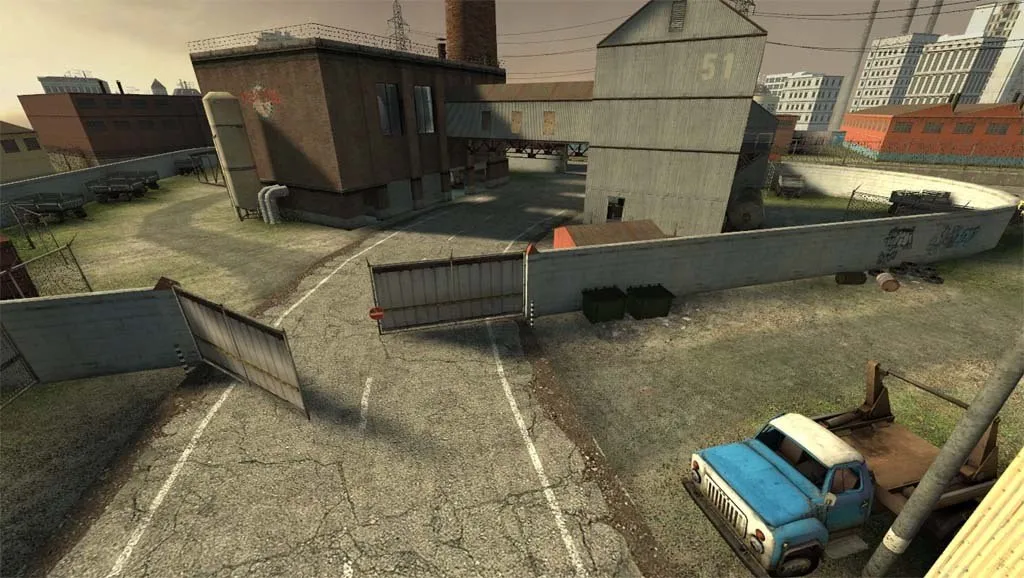
Counter-Strike: Source is Valve’s remake of Counter-Strike on the Source engine, released on October 7, 2004. Terrorists and Counter-Terrorists fight round-based matches with no respawns within a round, using money earned between rounds to buy weapons and armor.
CS:S arrived alongside Half-Life 2, the game the Source engine was built for, and came bundled with Half-Life 2 packages at the time. In the series timeline it sits between the GoldSrc-era games (Counter-Strike 1.6 and Counter-Strike: Condition Zero) and Counter-Strike: Global Offensive (2012), which later became Counter-Strike 2 (2023).
Its second life is as a content library. Garry’s Mod, the sandbox by Facepunch Studios, runs on Source, and a huge share of its community maps, models and addons reference CS:S textures. If you’ve ever seen purple-and-black checkerboards and “ERROR” models in Garry’s Mod, missing CS:S content is the usual cause. Owning CS:S on Steam and mounting it is the legitimate fix.
Game modes: bomb defusal and hostage rescue
CS:S ships with two official objective modes, both played to a round limit or time limit set by the server.
- Bomb defusal (de_ maps): Terrorists plant the C4 at bombsite A or B. Counter-Terrorists win by defusing it, killing every Terrorist before the plant, or running down the clock.
- Hostage rescue (cs_ maps): Counter-Terrorists must reach hostages held by the Terrorists and lead them to a rescue zone. Terrorists win by holding them until time expires or eliminating the CT side.
In both modes, a dead player watches until the next round. That single rule is why CS punishes reckless peeks more than most shooters: every death costs your team a body for the rest of the round, and often costs you your weapons for the next one too.
What the Source engine changed from CS 1.6
The move from GoldSrc to Source brought three big changes you notice at once:
- Physics. Barrels, crates and bodies are physics objects. A grenade can knock props around, and ragdoll deaths replaced 1.6’s canned animations.
- Lighting and visuals. Normal-mapped textures, dynamic shadows, HDR on some maps, and higher-poly player models. The February 2025 update added bicubic lightmaps from the Half-Life 2 20th Anniversary update, which smooth the blocky edges of baked shadows.
- Hit registration and feel. CS:S’s hitboxes and recoil were rebuilt, and competitive players have argued about them ever since. More on that in the comparison section.
Sound also changed: footsteps and gunshots use Source’s audio system, which many 1.6 veterans found harder to read for positional information.
Is CS:S still active? Player counts, explained
CS:S is active but small. SteamCharts shows an average of about 2,404 concurrent players in October 2026, peaking at 4,468. That’s far below the 2025 spike, but still enough to fill dozens of popular community servers in peak hours.
| Period | Peak players | Average players | Note |
|---|---|---|---|
| Late July 2025 (weekend) | 56,238 | n/a | 13-year high; ranked 27th on Steam (Dust2.us) |
| September 8, 2025 | 63,989 | n/a | All-time tracked peak (SteamBase); Raijin logs 63,971 |
| July 4, 2026 (snapshot) | 13,573 in game | n/a | Live count recorded by Raijin |
| Week of mid-September 2026 | Above 3,000 | n/a | Around the September technical patch |
| October 2026 | 4,468 | ~2,404 | SteamCharts monthly data |
Did you know?
According to Dust2.us, Counter-Strike: Source hit 56,238 concurrent Steam players over a weekend in late July 2025. That was its highest in 13 years and put it 27th among Steam’s most-played games, and the cause has never been confirmed.
The 2025 player spike: real revival or bots?
It was probably mostly not a real revival. The spike was never explained, and the most-cited community evidence points to bot or idle servers inflating the count. Mein-MMO reported that the game added around 40,000 players in a short window with no announcement, sale or update to explain it.
The theories in circulation:
- Garry’s Mod players returning, since CS:S content is a near-requirement for many Garry’s Mod servers.
- Nostalgia, helped by the February 2025 update putting CS:S back in the news.
- A sale, though nothing on the scale of the jump was documented.
- Bot or idle servers. Community screenshots showed many Russian servers with identical names. That pattern usually points to automated clients rather than humans.
The later numbers favor the skeptics. A genuine nostalgia wave usually fades slowly, over months. CS:S went from a September 2025 peak near 64,000 to an October 2026 average around 2,400, which looks more like inflated concurrency switching off than real players drifting away. Treat the 2025 peaks as a curiosity, not as the size of the active community.
How to read SteamCharts vs SteamDB vs Tracker.gg
The trackers disagree because they sample Steam’s concurrent-player API at different times and report different statistics. None of them can tell a human player from an idle or automated client.
| Tracker | What it shows | How to use it |
|---|---|---|
| SteamCharts | Monthly average and monthly peak | Best for long-term trends; the average is the most honest “how alive is it” number |
| SteamDB | Live count, 24-hour and all-time peaks, patch history | Best for checking a spike in real time and matching it to updates |
| SteamBase / Raijin | Peaks and live snapshots | Useful cross-checks; their all-time peaks differ slightly (63,989 vs 63,971) because of sampling time |
| Tracker.gg and similar | Player stats from their own data | Shows engaged players, not total concurrency |
Rule of thumb: read the monthly average, not the peak. A peak shows one busy moment. The average tells you whether a server will have people in it when you log on.
When and where servers are busiest
Concurrency is highest at weekends, which is when the July 2025 record was set. The server list leans heavily toward European and Russian-speaking communities, and that region was also home to the suspicious identical-name servers in 2025. North American players will find fewer low-ping options, so the ping filter in the server browser is the first thing to set.
Does Valve still update Counter-Strike: Source?
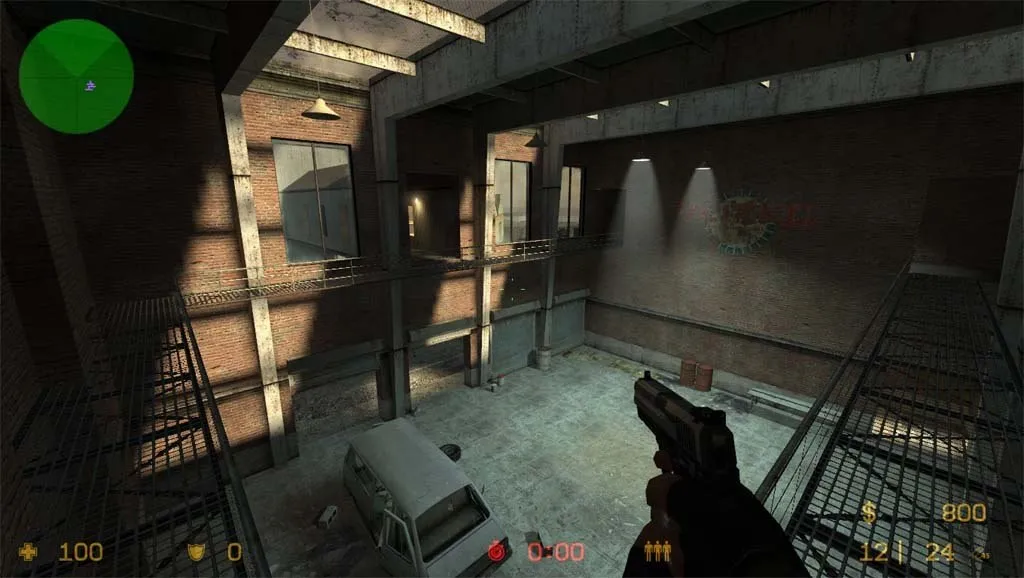
Yes. After nearly four years of silence, Valve released a major 64-bit update in February 2025 and followed it with security and stability patches in August and September 2026. The updates are maintenance, not new content. There are no new maps, weapons or modes.
| Date | Key changes |
|---|---|
| July 2021 | Last update before the long gap |
| February 18, 2025 | Native 64-bit binaries (launch automatically on 64-bit OSes); bicubic lightmaps and radial fog from the Half-Life 2 20th Anniversary update; borderless-window option; UI scaling; same-day 64-bit update for Day of Defeat: Source |
| August 24, 2026 | Security and stability improvements, part of a batch across Valve’s older shooters; SteamDB’s patch archive also lists a fix for a client crash tied to a HUD element and a Linux fix for custom map assets |
| Mid-September 2026 | Technical patch with no new content: fixed a “Create Server” dialog overlay bug and the display of clan tags and achievement notifications |
Did you know?
Esports.net noted that the February 18, 2025 update was CS:S’s first patch since July 2021. It came more than 20 years after the game’s launch.
The February 2025 64-bit update
The February 2025 update moved CS:S to 64-bit binaries, which launch automatically on any 64-bit operating system. In practice that means the game can address far more than the roughly 4 GB of memory a 32-bit process is limited to. For CS:S that matters most on heavily modded community servers, where custom maps, models and sounds used to push the old client into out-of-memory crashes.
Valve didn’t explain why it updated CS:S after so long. The context points to an engine refresh across Valve’s older Source games. Team Fortress 2 and Day of Defeat: Source were updated the same day, and the visual features came straight from the Half-Life 2 20th Anniversary work. CS:S benefited from Valve tidying up its shared Source codebase rather than from a CS:S-specific plan.
2026 security and stability patches
The August 24 and mid-September 2026 patches are housekeeping, and that’s good news. Security fixes matter in a game where you connect to servers run by strangers, and only Steam copies receive them. The September patch arrived during a week when CS:S peaked above 3,000 players, a sign that Valve keeps maintaining the game even at low population.
Mac, Linux and Steam Deck status
Steam Support currently lists Windows and SteamOS + Linux as CS:S’s supported platforms. The native Linux build means CS:S installs on Steam Deck. You’ll want a mouse-and-keyboard-style control layout, because this is a desktop shooter at heart.
Mac is the open question. When the 64-bit update landed in February 2025, GamingOnLinux reported that Valve gave no word on an AMD64 or ARM64 build for macOS. The old 32-bit Mac version doesn’t run on current macOS, so Mac players should not buy CS:S expecting it to work natively.
Heads up
Valve’s support page lists only Windows and SteamOS + Linux for CS:S as of November 2026. Check this before buying on a Mac.
Price, download and is it free?
Counter-Strike: Source costs $9.99 on Steam and isn’t free-to-play. Sales regularly cut the price, and its lowest recorded price is $0.99 from a 2019 Steam sale. Steam is the only legitimate way to get it.
Steam price and sale history
GG.deals confirmed the $9.99 Steam list price in January 2026. CS:S is also sold in Valve bundles alongside other Counter-Strike and Source titles, which can be better value if you want Half-Life 2 or Day of Defeat: Source as well.
Shotcaller's note
Wishlist CS:S on Steam and wait for a seasonal sale. It has dropped as low as $0.99, so you’ll rarely need to pay the full $9.99.
Grey-market key resellers, which some download sites link to, sell keys of uncertain origin. Keys can be revoked, and you have no recourse with Valve if that happens. A sale on Steam itself usually costs about the same.
Is there a legal free version?
No. There’s no free, legal version of Counter-Strike: Source. Sites offering a “free download”, “clean build” or torrent are distributing Valve’s paid game without permission, and the risks go beyond legality:
- No official patches. The 64-bit update and the 2025 and 2026 security fixes only reach Steam copies.
- Malware risk. Repacks are executable files from anonymous uploaders.
- No Steam integration. No Steam server browser, no achievements, no Workshop-style content and no VAC (Valve Anti-Cheat) protection on secured servers.
So is the free download version safe? No. It’s a stale, unverified copy of a game that costs less than $10 and is often under $2.
Shotcaller's note
Skip torrent and “clean build” downloads. They miss Valve’s 2025 and 2026 security patches, which are the very fixes that protect you when you join strangers’ servers.
Counter-Strike: Source on mobile and APKs: what’s real
No official mobile version of CS:S exists. Valve has never released Counter-Strike: Source for Android or iOS. APK files using the name are unofficial ports, fan projects or outright scams, and none of them come from Valve. If you want Counter-Strike on the go, the realistic option is the native CS:S build on a Steam Deck.
Counter-Strike: Source system requirements and install size
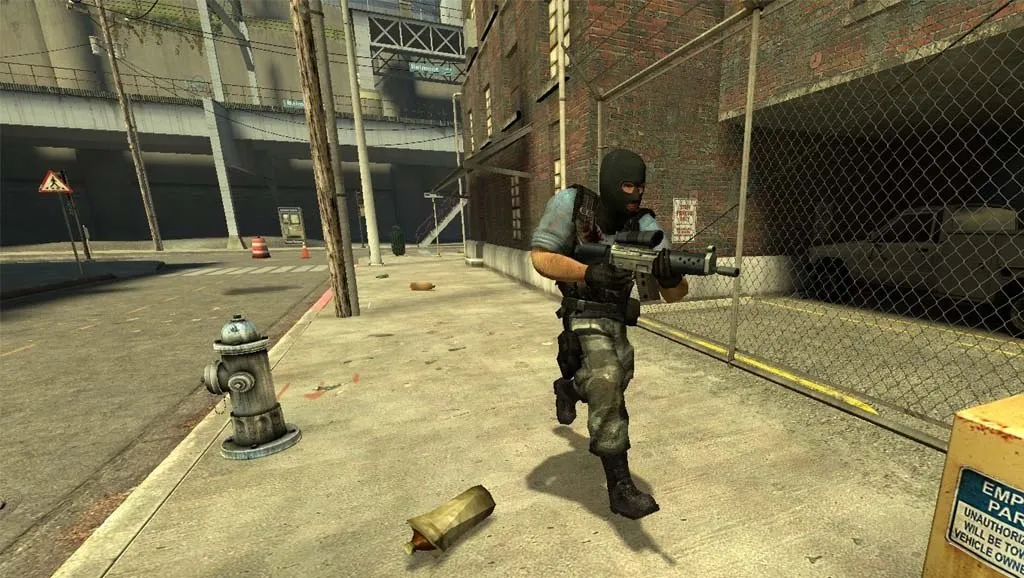
CS:S runs on almost any PC. The minimum is a 1.7 GHz processor with SSE support, 512 MB of RAM and a DirectX 8.1 graphics card, and the recommended setup is a Pentium 4 at 3.0 GHz, 1 GB of RAM and a 128 MB DirectX 9 GPU. Plan on about 4.6 to 5 GB of disk space.
Minimum vs recommended
| Component | Minimum | Recommended |
|---|---|---|
| OS | Windows 7 (32/64-bit), Vista, XP (as listed on Steam) | 64-bit Windows; SteamOS + Linux also supported |
| Processor | 1.7 GHz, SSE required | Pentium 4 3.0 GHz |
| Memory | 512 MB RAM | 1 GB RAM |
| Graphics | DirectX 8.1 card | DirectX 9 GPU, 128 MB VRAM |
| Storage | 4.6 GB free | 4.6 GB+ (more for custom content) |
The Steam store’s OS list is a relic from the 2000s. Since February 2025, the game launches its 64-bit binaries on 64-bit Windows and Linux automatically, and that’s the setup you want. The SSE requirement only matters on genuinely ancient CPUs. Anything from the last two decades has it.
Budget extra disk space if you play on community servers. Custom maps, sounds and models download into your CS:S folder and pile up over time.
Best settings for high FPS on modern PCs
A modern PC can push CS:S far past any monitor’s refresh rate. The aim is consistency, not raw FPS.
Quick steps: smooth CS:S on a high-refresh monitor
- Turn on the borderless-window option added in February 2025.
- Set fps_max above your refresh rate, for example 400 on a 240 Hz panel.
- Set mat_queue_mode 2 to use multicore rendering.
- Add -novid to launch options to skip the intro video.
- Use net_graph 1 to check FPS and ping in game.
Turning graphics settings down rarely matters on current hardware. What matters is a stable frame cap and a server with low ping. Since the 64-bit update, check Task Manager to confirm the 64-bit executable is running if you get crashes on heavy custom maps.
Counter-Strike: Source maps
The classic CS:S map pool is a set of defuse (de_) and hostage (cs_) maps, most of them Source-engine remakes of 1.6 layouts. de_dust2 remains the most-played. Community servers add hundreds of custom maps, and in 2026 those draw a large share of the player base.
Official maps
| Map | Mode | What it plays like |
|---|---|---|
| de_dust2 | Bomb | Long A, mid doors, B tunnels: the most balanced and most-populated map |
| de_inferno | Bomb | Tight banana and apartments fights; rewards utility and patience |
| de_nuke | Bomb | Vertical sites stacked on top of each other; sound and rotations decide rounds |
| de_train | Bomb | Long sightlines between train cars; strong for AWPers |
| de_aztec | Bomb | Rope bridge and water; a CT-sided classic |
| de_dust | Bomb | Underpass-heavy original that inspired Dust2 |
| cs_office | Hostage | Corridors, windows and the snowy outside; a chaotic public-server favorite |
| cs_italy | Hostage | Market, apartments and wine cellar; famous for its ambient music |
| cs_assault | Hostage | Warehouse assault; CTs push in from the roof and vents |
| cs_militia | Hostage | Farmhouse with a basement and a vent route |
If you’ve played Counter-Strike 2, de_dust2, de_inferno and de_nuke will feel familiar in layout but not in detail. Angles, boost spots and smoke lineups differ, so CS2 utility knowledge doesn’t carry over cleanly.
Popular community server modes
Most CS:S servers in 2026 run modified modes rather than stock 5v5:
- Surf: Slide along angled ramps using air-strafing. A movement skill game with timers and leaderboards.
- Bhop: Bunny-hop courses that rely on chaining jumps.
- Jailbreak: Prisoners (T) follow orders from guards (CT) in mini-games.
- Zombie Escape / Zombie Mod: Humans flee or hold out against infected players.
- Deathrun: Runners dodge traps triggered by one player.
- Gungame, deathmatch and aim maps: Fast respawn modes good for warming up.
How to find a good server in 2026
Use the Steam server browser inside CS:S and filter by map and ping. Searching for stock maps such as de_dust2 or de_inferno with ping under about 80 ms is the fastest way to find vanilla 5v5 or casual 10v10 play instead of surf or jailbreak.
There are still vanilla servers, but they’re the minority. Expect to find more casual 10v10 and 12v12 public servers on stock maps than strict 5v5 competitive lobbies.
- Open the server browser and go to the Internet tab.
- Set the map filter to a stock map (de_dust2, de_inferno, de_nuke, cs_office).
- Set a maximum ping and tick “Has users playing” and “Server not full”.
- Sort by player count, then check the server name and tags for “vanilla”, “classic” or “5v5”.
- Favorite good servers. Small communities live on regulars.
Third-party listings such as GameTracker show server history and populations, so you can see which servers are busy at what times before you launch the game.
Shotcaller's note
Avoid servers with identical names and suspiciously full slots. In 2025, clusters of same-named servers were the main sign of bot or idle concurrency, and they’re useless for real matches.
Playing offline with bots
Yes, you can play CS:S offline against bots. That puts it at odds with download sites claiming there’s no single-player mode. Choose Create Server from the main menu, pick a map, and the game launches a local server with Valve’s built-in bots, which first appeared in Condition Zero. From the console you can use bot_add, bot_kick and bot_difficulty to set up the match. It’s the simplest way to learn a map’s layout or warm up your aim.
Hosting your own server
For playing with friends, Create Server works for a quick LAN or listen-server game. For something persistent, a dedicated server through Valve’s SteamCMD tool is the standard route, and community admin plugins handle map rotation and moderation. Keep any dedicated server updated after each Valve patch, or players on the latest client won’t be able to connect.
CS 1.6 vs CS:S vs CS:GO vs CS2: what’s different
The four main Counter-Strike games share rules, sides and many map names, but each one runs on a different engine generation with its own movement, recoil and business model. Counter-Strike (1.6) uses GoldSrc. CS:S remade it on Source in 2004, CS:GO modernized it in 2012, and CS2 moved to Source 2 in 2023.
| Attribute | CS 1.6 | CS:S | CS:GO | CS2 |
|---|---|---|---|---|
| Engine | GoldSrc | Source | Source (CS:GO branch) | Source 2 |
| Release | 2003 (1.6 update) | October 7, 2004 | August 21, 2012 | September 27, 2023 |
| Price model | Paid | Paid ($9.99) | Free-to-play from 2018 | Free-to-play, Prime upgrade |
| Official matchmaking | No | No | Yes (replaced by CS2) | Yes, Premier and Competitive |
| Where people play | Community servers | Community servers | Replaced by CS2 | Valve matchmaking, FACEIT, community |
| Pro scene | Historic, grassroots | Historic | Ended with CS2 | Current, top tier |
| Netcode | Tick-based | Tick-based | Tick-based (64/128) | Sub-tick |
So what’s the difference between Counter-Strike and Counter-Strike: Source? The original Counter-Strike (and its 1.6 version) runs on Half-Life’s GoldSrc engine, with sharper, more predictable movement and the iconic competitive feel of the 2000s. Counter-Strike: Source is the same game rebuilt on Half-Life 2’s engine, with physics, better graphics, different hitboxes and a softer, floatier feel that split the community. For the CS:GO-to-CS2 story, our piece on Counter-Strike: Global Offensive and what changed in CS2 covers that transition.
Movement and gunplay feel compared
From a competitive player’s view, the big differences are these.
- Movement: CS:S movement feels lighter than 1.6, and air-strafing is generous, which is exactly why surf and bhop thrived on Source. CS2 movement is heavier and more grounded, with sub-tick updates timing jumps and shots between ticks.
- Hitboxes: CS:S hitboxes were long criticized for not lining up perfectly with player animations, especially on moving targets. CS2 hitboxes match the model far more closely.
- Spray: CS:S sprays are less patterned and more random than CS:GO and CS2, where learning the AK-47 and M4 spray patterns is a core skill. In CS:S, tapping and short bursts pay off more than full sprays.
- First-shot accuracy: Running accuracy is more forgiving in CS:S than in CS2, which punishes shots fired while moving harshly.
If your aim habits come from CS2, expect your first CS:S sessions to feel loose. If you’re building fundamentals, structured practice in CS2 transfers better, the kind of drills covered in a Counter-Strike academy program.
Why some CS2 players go back to CS:S
Players return to CS:S for things CS2 doesn’t offer: community-run servers with their own rules and regulars, custom modes like surf and jailbreak, no skin economy, and a game that runs at hundreds of frames on a laptop. The trade-off is just as clear. There’s no ranked progression, no anti-cheat environment comparable to Premier, and a fraction of the population.
CS:S competitive legacy
CS:S had a real competitive scene in the 2000s, but most top pros stayed on 1.6. CS:S got its biggest platform from the Championship Gaming Series (CGS), the televised franchised league that used CS:S in 2007 and 2008 before it shut down in late 2008. Leagues such as ESEA also ran CS:S divisions.
Many top players disliked the hitboxes, the random spray and the feel of the movement. The best-paid tournaments mostly kept 1.6, so the scene stayed split until CS:GO arrived in 2012 and pulled both communities into one game. Today’s top-level Counter-Strike happens entirely in CS2. Our daily esports results pages, such as the one for November 14, 2026, track that circuit.
Mods and spin-offs: Source Offensive and more
CS:S’s mod scene outlived its competitive scene. The best-known modern project is Counter-Strike: Source Offensive, which brings CS:GO-era features such as weapons and maps into CS:S and is distributed through ModDB. Mods like this need a legitimate Steam copy of CS:S to run.
Don’t confuse it with Classic Offensive. That was a separate fan project for CS:GO that aimed to recreate the feel of CS 1.6 on the newer engine, after about eight years of development. Valve blocked its Steam release, and in May 2025 the team confirmed the project was cancelled. Valve’s stated position was that releasing it would distribute derived content based on Valve’s intellectual property, which the Steam User Agreement doesn’t allow. That outcome is a useful reminder that Valve tolerates mods built on owned copies, but not standalone games built from its assets.
The other big ecosystem is Garry’s Mod. Facepunch Studios’ sandbox mounts CS:S content for maps, props and textures, which is why CS:S consistently sells to people who never plan to plant a bomb. Do you need CS:S for Garry’s Mod textures? For many popular servers and addons, yes, and buying CS:S on Steam is the clean way to get them.
FAQ
Is Counter-Strike: Source still playable?
Yes. CS:S is sold on Steam, runs natively on 64-bit Windows and Linux, and received its latest Valve patch in September 2026. You can join community servers or play offline against bots.
Is CS Source still active in 2026?
Yes, on a small scale. SteamCharts recorded an average of about 2,404 concurrent players in October 2026, with a peak of 4,468. That’s enough for busy community servers at peak hours, but far below the bot-suspected 2025 spike.
Why is CS Source suddenly getting so many players? Are they just bots?
The 2025 spike to 56,238 (July) and about 63,989 (September) was never officially explained. Community screenshots of many identically named Russian servers fed suspicions of bot or idle servers, and the fall to around 2,400 average players by October 2026 supports that view.
Can you play CS Source for free?
No. CS:S isn’t free-to-play. It costs $9.99 on Steam and has dropped as low as $0.99 in sales. “Free download” and torrent versions are unauthorized, miss Valve’s patches and can carry malware.
What is the difference between Counter-Strike and Counter-Strike: Source?
Counter-Strike (1.6) runs on the GoldSrc engine, while Counter-Strike: Source is Valve’s 2004 remake on the Source engine from Half-Life 2. CS:S adds physics, better lighting and new models, and has different hitboxes, recoil and movement feel.
When did Counter-Strike: Source come out?
Counter-Strike: Source was released on October 7, 2004.
How big is Counter-Strike: Source (download size)?
Plan on about 4.6 to 5 GB of free space. Community servers download custom maps and assets, so your install grows over time.
What are the Counter-Strike: Source system requirements?
The minimum is a 1.7 GHz CPU with SSE, 512 MB of RAM and a DirectX 8.1 GPU. The recommended setup is a Pentium 4 3.0 GHz, 1 GB of RAM and a DirectX 9 GPU with 128 MB of VRAM. Any modern PC exceeds both.
Is there a Counter-Strike: Source mobile version?
No. Valve has never released CS:S for Android or iOS. Any APK using the name is unofficial.
Can you play CS:S offline with bots?
Yes. Use Create Server from the main menu to start a local game with Valve’s built-in bots, then add or remove bots and set their difficulty from the console.
Does Counter-Strike: Source work on Steam Deck, Linux and Mac?
Steam Support lists Windows and SteamOS + Linux, so CS:S runs natively on Linux and Steam Deck. Valve hasn’t announced a 64-bit or ARM build for Mac, and the old 32-bit Mac version doesn’t run on current macOS.
Is CSS worth buying in 2026 or should I just play CS2?
For ranked play and a big player pool, play CS2, which is free. Buy CS:S if you want community servers, surf and other classic custom modes, Garry’s Mod assets, or the 2004 feel, ideally during a Steam sale.
The best way to judge CS:S in 2026 is to wishlist it, buy it on a sale, filter the server browser for de_dust2 at low ping, and play a few rounds. Ten minutes on a full stock-map server will tell you more than any player-count chart.
Article details
- Fact-checked by Desmond Ayodele against the sources listed below before publication.
- Published
How this article was checked
- Researched from 8 sources, listed below.
- Every claim is checked by Desmond Ayodele; anything we cannot confirm is corrected, labelled or removed.
Sources (8)
- Counter-Strike: Source gets surprise huge update after over 20 years (esports.net)
- Counter-Strike: Source and Day of Defeat: Source get major updates with 64bit support (gamingonlinux.com)
- Valve updated a bunch of their older Steam shooters (gamingonlinux.com)
- Counter-Strike: Source - Raijin (raijin.gg)
- A 21-year-old shooter just gained 40,000 new players on Steam and no one knows why (mein-mmo.de)
- Counter-Strike: Source reaches 13-year high player count on Steam (dust2.us)
- Counter-Strike: Source Steam Charts - SteamBase (steambase.io)
- Counter-Strike: Source - SteamCharts (steamcharts.com)